.png?width=162&height=64&name=IRWINS%20website%20logo%20(1).png "IRWINS website logo (1)")
by Irwin's Marketing Team, on Feb 18, 2026, 5:23:00 PM
Safety audits are not designed to “catch” companies. They are designed to verify compliance, consistency, and accountability. Yet many organizations across construction, mining, oil and gas, and forestry fail audits every year.
Failure is rarely about one catastrophic issue. It is usually a pattern of small gaps that compound.
Below are the most common reasons companies fail safety audits and how to prevent them.
1. Incomplete or Missing Documentation
The number one cause of audit failure is documentation gaps.
Auditors expect:
• Training records
• Incident reports
• Inspection logs
• Hazard assessments
• Toolbox talk records
• Equipment maintenance logs
When documents are missing, outdated, or stored inconsistently across job sites, compliance becomes impossible to prove.
Even if the work was done, if it is not documented properly, it may not count.
2. Inconsistent Implementation Across Job Sites
Many companies have strong policies on paper but weak execution in the field.
Common examples:
• Site A follows procedures strictly, Site B does not
• Supervisors interpret policies differently
• Workers are unclear on reporting expectations
Audits assess consistency. If safety processes are not standardized across all locations, the company appears non-compliant.
This becomes especially problematic for multi-site operations in Western Canada.
3. Poor Incident Reporting and Investigation Records
Incomplete incident documentation is a major red flag.
Issues often include:
• Missing root cause analysis
• No corrective action tracking
• Delayed reporting
• Lack of follow-up documentation
Auditors want evidence that incidents lead to learning and prevention. If corrective actions are not documented or verified, the system appears ineffective.
4. Outdated Training Records
Expired certifications are one of the fastest ways to fail an audit.
Common problems:
• Workers with expired first aid or equipment tickets
• No centralized tracking system
• Training records stored in spreadsheets that are not updated
Without a clear system to monitor training expirations, compliance becomes reactive rather than proactive.
5. Lack of Internal Audits and Monitoring
Companies that wait for an external audit to discover issues are already behind.
Strong safety programs conduct:
• Internal audits
• Routine inspections
• Supervisor spot checks
• Ongoing performance tracking
When auditors see no evidence of internal oversight, it signals weak management control.
6. Paper-Based Systems That Create Gaps
Paper systems are vulnerable to:
• Lost forms
• Illegible handwriting
• Delayed data entry
• Inconsistent filing
• Duplicate versions of documents
In fast-moving industrial environments, paper systems often create unintentional compliance gaps.
Digital systems improve traceability, real-time reporting, and centralized storage, which reduces audit risk significantly.
7. Weak Safety Culture and Leadership Engagement
Auditors often interview workers. If employees:
• Do not understand procedures
• Cannot explain reporting processes
• Are unaware of safety expectations
it signals a disconnect between management and frontline teams.
Safety culture is observable. It cannot be fabricated during an audit week.
8. Failure to Track Corrective Actions
One of the most overlooked issues is unclosed action items.
Auditors look for:
• Identified hazards
• Assigned corrective actions
• Clear deadlines
• Verified completion
If hazards are identified but not formally closed, it indicates systemic weakness.
How to Prevent Audit Failure
Organizations that consistently pass audits share common traits:
• Centralized safety documentation
• Real-time incident tracking
• Clear corrective action workflows
• Standardized processes across sites
• Ongoing internal review systems
• Digital record management
Combining structured safety consulting with digital management systems dramatically reduces audit risk. Companies that integrate software into their safety programs gain visibility, accountability, and traceability across all operations.
Strengthen Your Audit Readiness with the Right Partner
Passing safety audits consistently requires more than good intentions. It requires structured systems, real-time visibility, and documented accountability across every job site.
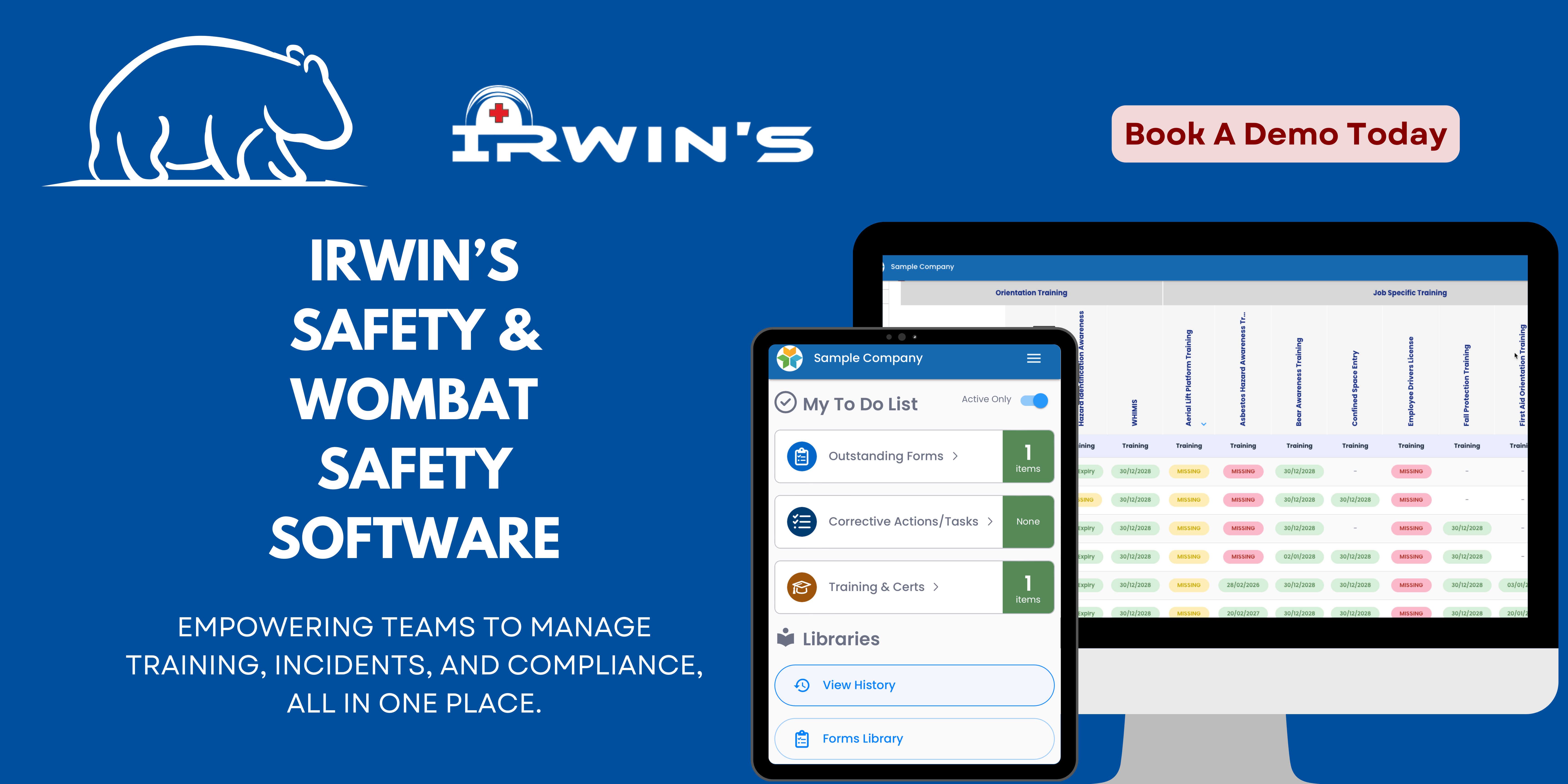
That is why Irwin’s Safety partnered with Wombat Safety Software.
By combining professional safety consulting with a centralized digital safety management platform, organizations can:
• Track incidents and corrective actions in real time
• Standardize documentation across multiple sites
• Monitor training certifications and expiry dates
• Maintain organized, audit-ready records
• Reduce administrative burden on supervisors
• Improve overall safety culture and accountability
Instead of scrambling to prepare for audits, companies can operate in a constant state of readiness.
If your organization is still relying on spreadsheets or paper-based systems, now is the time to evaluate whether your current approach truly protects you during audits.
Book a consultation or request a demo to see how integrated safety consulting and digital safety management can reduce compliance risk and support your long-term operational success.