.png?width=162&height=64&name=IRWINS%20website%20logo%20(1).png "IRWINS website logo (1)")
by Irwin's Marketing Team, on Apr 20, 2026, 7:14:41 PM
Confined spaces remain one of the highest-risk environments across Canadian industry. From tanks and vessels to underground infrastructure and process equipment, these spaces introduce a combination of atmospheric, physical, and operational hazards that require strict regulatory control. For employers, compliance is not optional. It is a legal and operational requirement that directly impacts worker safety, project continuity, and liability exposure.
This article outlines how confined space regulations function in Canada, what is expected from employers, and how modern solutions such as Digital Confined Space Monitoring (DCSM) are changing the standard for compliance and control.
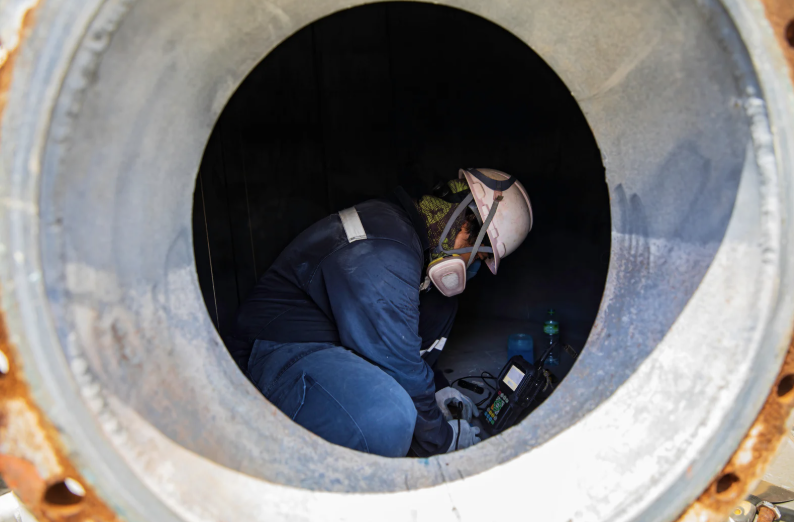
Understanding Confined Space Regulations in Canada
Confined space legislation in Canada is governed at the provincial level, but the framework is consistent across jurisdictions. Whether operating in British Columbia, Alberta, Ontario, or elsewhere, employers must follow structured requirements for identification, hazard assessment, entry procedures, and rescue planning.
A confined space is generally defined by three characteristics:
• Limited or restricted entry and exit
• Not designed for continuous occupancy
• Potential to contain hazardous atmospheres or conditions
Once a space meets this definition, it triggers regulatory obligations.
Core Compliance Requirements
1. Hazard Assessment
Before any entry, a documented hazard assessment must be completed. This includes identifying:
• Atmospheric hazards such as oxygen deficiency, toxic gases, or flammable vapors
• Physical risks including engulfment, mechanical hazards, or energy sources
• Environmental conditions like temperature extremes or poor visibility
This assessment forms the basis for all subsequent control measures.
2. Entry Permits and Procedures
A confined space entry permit is mandatory in most jurisdictions. It must clearly define:
• Scope and duration of the work
• Identified hazards and mitigation controls
• Required PPE and monitoring equipment
• Roles and responsibilities of personnel
Permits are not administrative paperwork. They are operational control documents that must be actively managed during the job.
3. Atmospheric Monitoring
Continuous gas monitoring is required to ensure safe entry conditions. This includes:
• Pre-entry testing
• Ongoing monitoring during occupancy
• Immediate response protocols if thresholds are exceeded
Manual checks alone are no longer sufficient for high-risk or complex environments.
4. Training and Competency
Workers involved in confined space operations must be trained and competent. This includes:
• Entrants
• Attendants
• Supervisors
• Rescue personnel
Training must be specific to the type of confined space and hazards involved, not generic certification alone.
5. Rescue Planning
Every confined space entry must have a documented rescue plan. This includes:
• Dedicated rescue personnel or standby teams
• Pre-staged rescue equipment
• Defined communication protocols
Relying on external emergency services without a structured plan is typically non-compliant and operationally unsafe.
Where Most Companies Fail
In practice, compliance breakdowns are rarely due to lack of awareness. They occur in execution:
• Paper-based permits that are not updated in real time
• Inconsistent atmospheric monitoring practices
• Poor visibility into active entries across multiple sites
• Delayed response to changing conditions
• Lack of centralized data for audits and reporting
These gaps increase both regulatory risk and the likelihood of incidents.
Moving Beyond Compliance with Digital Confined Space Monitoring (DCSM)
Traditional confined space programs rely heavily on manual processes. As operations scale, this approach becomes difficult to manage effectively.
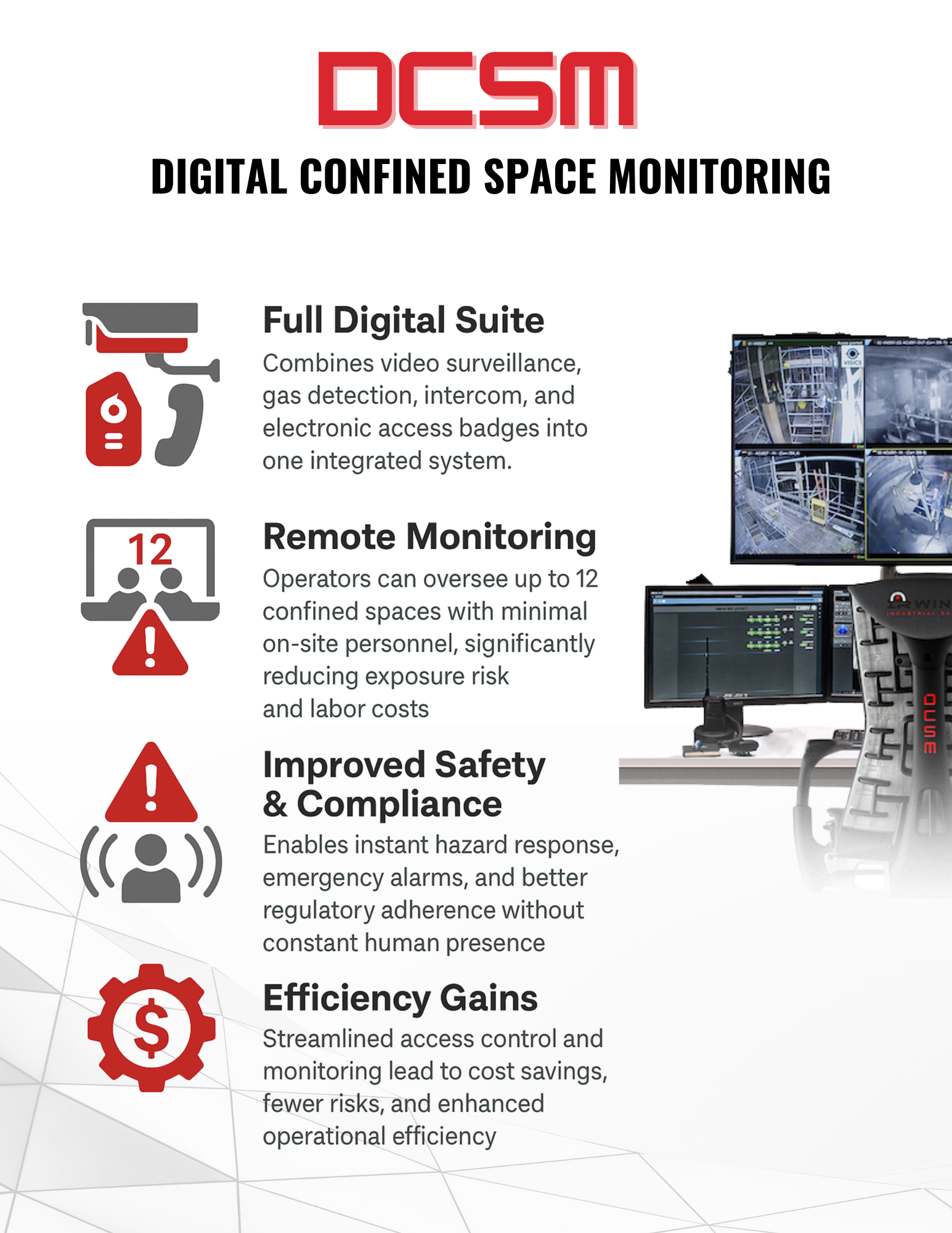
Irwin’s Safety addresses this gap through Digital Confined Space Monitoring (DCSM). This system integrates real-time data, monitoring, and oversight into a centralized platform.
With DCSM, companies can:
• Monitor confined space conditions in real time across multiple locations
• Digitize entry permits and eliminate paper-based errors
• Track worker activity and exposure continuously
• Receive instant alerts for hazardous conditions
• Maintain audit-ready records automatically
This shifts confined space management from reactive compliance to proactive risk control.
Why It Matters
Confined space incidents are often severe and time-critical. Delays in detection or response can have immediate consequences.
From an operational standpoint, poor confined space management also leads to:
• Project delays due to shutdowns or incidents
• Increased insurance and compliance costs
• Reputational risk with clients and regulators
Organizations that adopt structured, technology-driven systems gain both safety and efficiency advantages.
Regulatory compliance is the baseline. The objective is to build a system that consistently controls risk, regardless of site complexity or scale.
For companies operating across multiple locations or managing high volumes of confined space entries, manual systems are no longer sufficient. Digital oversight is becoming the industry standard.
If your organization is managing confined space work, now is the time to evaluate whether your current process can withstand both regulatory scrutiny and real-world conditions.
Irwin’s Safety provides full-cycle confined space solutions, including consulting, rescue services, training, and advanced monitoring technologies.
Learn more about Digital Confined Space Monitoring and how it can strengthen your compliance and safety performance:
https://www.irwinsafety.com/digital-confined-space-monitoring
Or connect with our team to assess your current confined space program and identify gaps before they become risks.
