.png?width=162&height=64&name=IRWINS%20website%20logo%20(1).png "IRWINS website logo (1)")
by Irwin's Marketing Team, on Jan 12, 2026, 5:37:59 PM
Hard hats are one of the most basic pieces of personal protective equipment on any job site, yet they are also one of the most misunderstood. Choosing the wrong type or keeping a hard hat in service too long can quietly put workers at risk and expose employers to compliance issues.
This guide explains hard hat types, classes, and replacement rules in simple terms so safety managers, supervisors, and employers can make informed decisions.
What Is a Hard Hat and Why It Matters
Hard hats protect workers from head injuries caused by falling objects, impact, and electrical hazards. In industrial, construction, and maintenance environments, head injuries are among the most severe and costly incidents.
Using the correct hard hat is not optional. It is a fundamental requirement of workplace safety regulations and a key part of any effective safety program.
Hard Hat Types Explained
Hard hats are categorized by type, which refers to the kind of impact protection they provide.
Type I Hard Hats
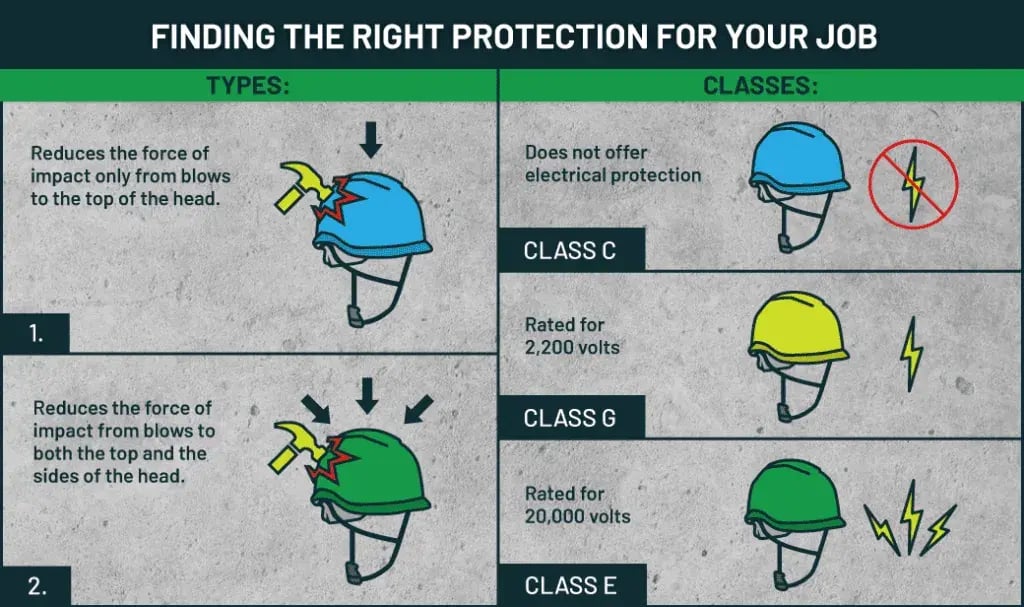
Type I hard hats are designed to protect against vertical impact only.
They are the most common hard hats used on job sites and are suitable for environments where the primary risk is falling objects from above.
Typical use cases:
• Construction sites
• Warehouses
• General industrial work
Type II Hard Hats
Type II hard hats provide protection from both vertical and lateral (side) impact.
They offer a higher level of protection and are increasingly recommended for high-risk environments.
Typical use cases:
• Heavy industrial sites
• Mining
• Oil and gas
• Confined spaces
• Areas with moving equipment
Key takeaway:
If there is a risk of impact from the side, Type II hard hats are the safer choice.
Hard Hat Classes Explained
Hard hat classes indicate the level of electrical protection the helmet provides.
Class G – General
• Tested to protect against electrical exposure up to 2,200 volts
• Suitable for most construction and industrial environments
Class E – Electrical
• Tested to protect against electrical exposure up to 20,000 volts
• Required for electrical work or environments with high-voltage hazards
Class C – Conductive
• No electrical protection
• Lightweight and breathable
• Not suitable for environments with electrical hazards
Important note:
Class C hard hats should never be used where electrical exposure is possible.
How to Choose the Right Hard Hat for Your Workplace
When selecting a hard hat, consider:
• Type of impact risk (top only vs top and side)
• Presence of electrical hazards
• Work environment (construction, industrial, confined space)
• Job role and tasks performed
• Comfort and fit to encourage consistent use
Choosing the right hard hat is not about preference. It is about hazard assessment and compliance.
Hard Hat Replacement Rules (This Is Where Most Companies Get It Wrong)
Hard hats do not last forever, even if they look fine.
General Replacement Guidelines
• Most manufacturers recommend replacing the hard hat shell every 5 years
• The suspension system should be replaced every 12 months
• Always follow the manufacturer’s instructions if they differ
Replace a Hard Hat Immediately If:
• It has been struck by an object or involved in an impact
• There are cracks, dents, or signs of brittleness
• The shell shows UV damage, fading, or chalking
• The suspension is damaged or no longer fits properly
• The hard hat was exposed to extreme heat or chemicals
A hard hat that has taken an impact may no longer provide protection, even if there is no visible damage.
Common Hard Hat Mistakes Employers Make
• Using the wrong class for electrical environments
• Keeping hard hats in service well past their recommended lifespan
• Failing to replace damaged suspension systems
• Allowing stickers or paint that can weaken the shell
• Not training workers on proper inspection and replacement
These issues often show up during audits and inspections and can lead to compliance findings.
Hard Hat Inspections: A Simple Best Practice
Employers should require:
• Daily visual checks by workers before use
• Regular supervisor inspections
• Clear documentation of replacement timelines
Hard hat inspection should be part of routine safety talks and PPE training.
Final Thoughts
Hard hats may seem simple, but selecting the correct type, class, and replacement schedule is critical to protecting workers and meeting safety requirements.
If you are unsure whether your current head protection program meets regulatory standards or best practices, it is worth reviewing it before an incident or inspection forces the issue.
How Irwin’s Safety Can Help
Irwin’s Safety supports employers with:
• PPE training and compliance education
• Workplace safety audits and inspections
• Hazard assessments and program development
If you need help reviewing your PPE program or training your team, our safety professionals can help ensure your equipment and processes are aligned with real-world hazards.
